-1.png?width=122&height=75&name=AG%20Logo%20ReImagined%20-%20Gold%20Text%20(Main)-1.png)



A conversation is happening in boardrooms and IT leadership teams right now. It usually starts the same way. Someone in the room says, “We know we need to move off ECC. We just don’t know when.” And the meeting moves on to the next quarter’s priorities, the next budget cycle, the next urgent thing.
The SAP S/4HANA migration stays on the roadmap, somewhere in the future, never quite urgent enough to become now. It is a completely understandable position. SAP ECC works. It has worked for years.
The risk of changing something so embedded in the business feels greater than the risk of staying put. But that calculation is changing and faster than most organisations realise. The gap between SAP ECC and the new SAP Business Suite is no longer a gap between old and new. It is a gap between standing still and moving forward. And in a competitive UK market, standing still has consequences.
Get Your Free SAP S/4HANA Migration Guide↗️
Here are five real, practical business reasons why UK enterprises are making the move, not because they have to, but because the case for staying on ECC is getting harder to justify with every passing quarter.
1. AI Is Now the Enterprise Standard, Not a Future Promise
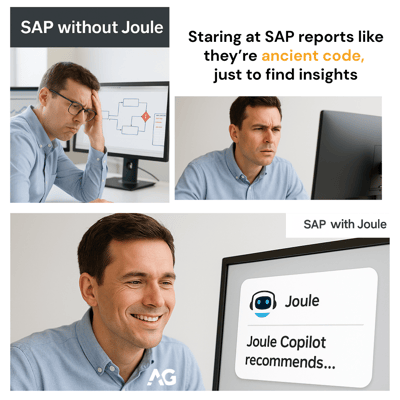
The UK enterprise market is rapidly moving to AI-powered operations. Joule AI agents in SAP Business Suite are already handling autonomous tasks in finance, procurement, and supply chain for UK customers. For organisations still on ECC, there is no path to this capability, as it requires SAP S/4HANA. UK businesses that delay migration are not just missing a software upgrade; they are falling behind competitors who are already automating decisions and processes that their teams are handling manually.
Every quarter on ECC, your competitors on S/4HANA are pulling further ahead with AI agents doing work your team still does manually.
2. Data Governance and Compliance Demands Are Rising
UK-specific compliance is rapidly digitising, with 91% of organisations finding SAP Data Migration more complex due to data-intensive, real-time reporting.
SAP Business Data Cloud’s unified, governed data architecture directly supports these requirements, providing audit-ready data lineage and real-time compliance reporting. SAP ECC’s fragmented data model makes this progressively harder and more expensive to achieve.
After December 2027, ECC will stop receiving UK legal and HMRC updates. Compliance on a frozen platform is not a risk; it is a certainty.
AG Enterprise GRC Solutions
Our SAP Experts have already navigated this challenge for organisations operating in highly regulated environments.
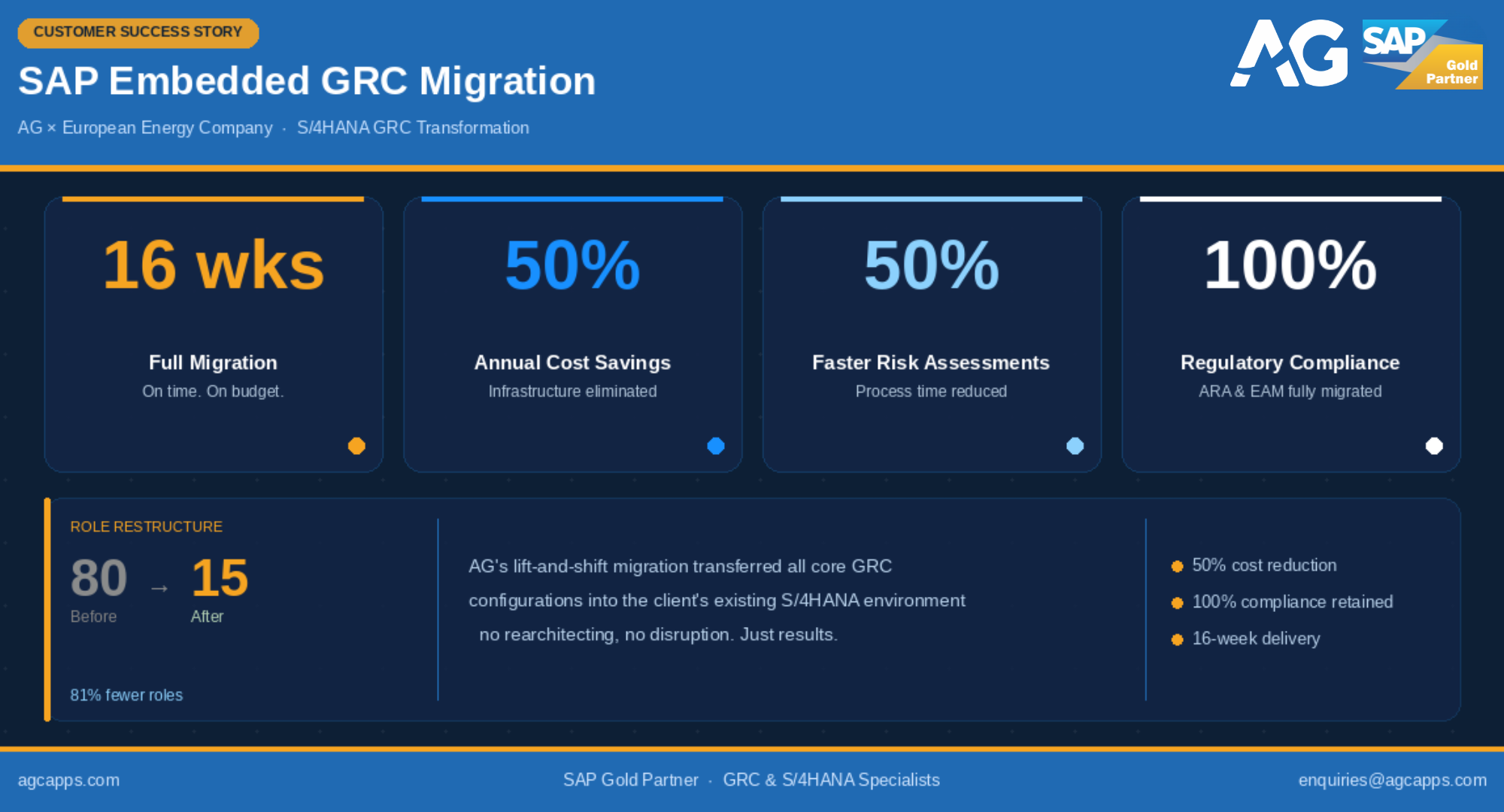
Working with a leading European energy company, AG migrated its standalone GRC system into SAP S/4HANA's embedded GRC implementation in just 16 weeks, eliminating data silos, reducing infrastructure costs by 50%, and achieving 100% compliance with current regulations. Access Risk Analysis and Emergency Access Management were fully migrated, and the role structure was simplified from 80 roles down to 15, tightening access control without adding operational overhead. Process time for risk assessments dropped by 50%.
The lesson is clear: waiting compounds the problem. The earlier compliance infrastructure is embedded into a modern SAP landscape, the less it costs to maintain and the more resilient it becomes as regulations evolve. AG brings the expertise to make that transition precise, low-risk, and within budget.
3. Continuous Innovation vs Frozen Functionality
SAP has committed all future innovation from generative AI to sustainability reporting, from intelligent asset management to advanced supply chain planning, exclusively to S/4HANA and the new Business Suite. SAP ECC will receive no new functionality after 2027. For UK businesses in fast-moving sectors such as energy transition, digital manufacturing, or life sciences, this innovation gap will only widen with each passing quarter.
SAP ECC is not declining; it is finished. Every new SAP capability, from Joule AI to sustainability reporting, is built exclusively for S/4HANA and the Business Suite.
4. The SAP Skills Market Is Shifting
The SAP talent landscape is moving decisively away from SAP ECC. As highlighted by the UK & Ireland SAP User Group, the pool of ECC specialists is steadily contracting as consultants retire or transition to newer platforms. At the same time, demand for expertise in SAP S/4HANA and SAP Business Technology Platform continues to accelerate.
For organisations delaying transformation, the risk is clear: by 2026–2027, they may face rising costs and limited access to ECC expertise precisely when migration support is most critical.
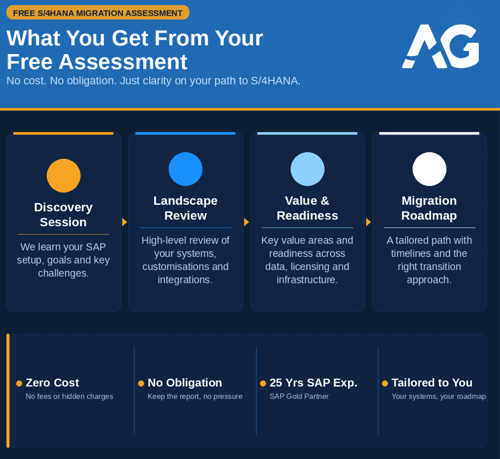
The smartest move right now is to understand exactly where you stand. AG’s free S/4HANA Migration Assessment gives you a clear picture of your current landscape, a readiness summary, and a tailored migration roadmap at no cost and with no obligation. With 25 years of SAP expertise and a track record across the energy sector and beyond, it’s the lowest-risk way to start planning before the window narrows.
Get your Free SAP S/4HANA Assessment ↗️
5. Clean Core Extensibility Changes the Economics
One of the biggest barriers to SAP migration for UK organisations has been the cost and risk of replicating highly customised ECC functionality in a new system.
SAP Build, included in all SAP Business Suite packages, fundamentally changes this calculus. UK teams can now build business-specific extensions, automate workflows, and create custom applications using low-code tools and generative AI without modifying the clean core. This means lower customisation costs, faster upgrades, and a dramatically reduced total cost of ownership over time.
The “our customisations are too complex” objection is fading. SAP Build lets UK teams extend Business Suite without touching the clean core at a fraction of the cost of ABAP development.
The SAP ECC Migration Timeline: What Happens if You Wait?
Here is the support timeline UK SAP ECC customers need to plan around:
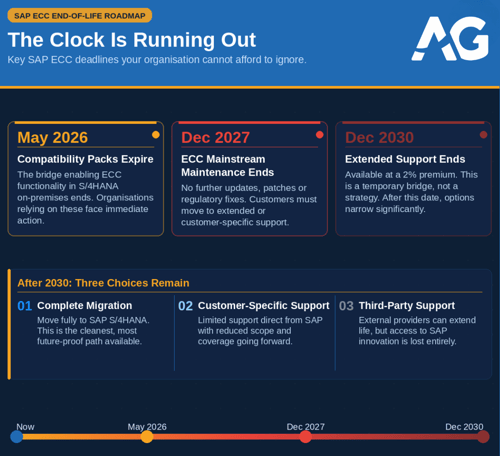
However, SAP won’t provide full innovation, regulatory updates, or patches beyond mainstream maintenance.
A Global Market Research project indicates that around 17,000 SAP ECC customers worldwide, including a significant proportion of UK organisations, will still be on the legacy platform when mainstream support ends in 2027. Consulting fees are projected to rise 30–50% in 2026–27 as migration demand peaks and partner capacity tightens.
How AG Helps Businesses Make Their Digital Transformation
AG is a UK-headquartered, award-winning SAP Gold Partner based in Slough, with clients across energy, pharmaceuticals, manufacturing, and retail. We are proud SAP partners, and we also have pre-configured, industry-specific, or line-of-business solutions, SAP-Qualified Partner-Packaged Solutions (SAP QPPS) for faster implementation.
Our approach starts with your business outcomes, not the technology. We help you build a compelling case for change, choose the right migration pathway, and execute with minimal disruption to your live operations.
SAP Advisory & Business Case Development
-
AG helps organisations build a clear path to S/4HANA with structured landscape assessments, custom code analysis, TCO modelling, and board-ready business cases that answer key questions on cost, timeline, risks, and ROI.
SAP S/4HANA & Business Suite Implementation
-
Our certified SAP Consultants deliver end-to-end SAP ECC-to-S/4HANA Migration aligned with the modern SAP Business Suite architecture. Our AG S4Energy (QPPS) package accelerates deployment for the Oil, Gas and Energy industry.
SAP BTP, Business AI & Intelligent Automation
-
We help organisations leverage SAP BTP and Business AI through Integration Suite, SAP Build automation, and AI services, supported by pre-built bots for Finance, Supply Chain, and Asset Management available on the SAP Store.
SAP Application Management Services (AMS)
-
Our AMS team provides ongoing support, optimisation, and enhancements to ensure your SAP environment continues delivering long-term business value.
The Next Step Is Simpler Than You Think
You do not need to have all the answers before starting this conversation.
Book our free, structured SAP S/4HANA Assessment, and we will provide clarity on your landscape, the business case, and the migration roadmap you need.